
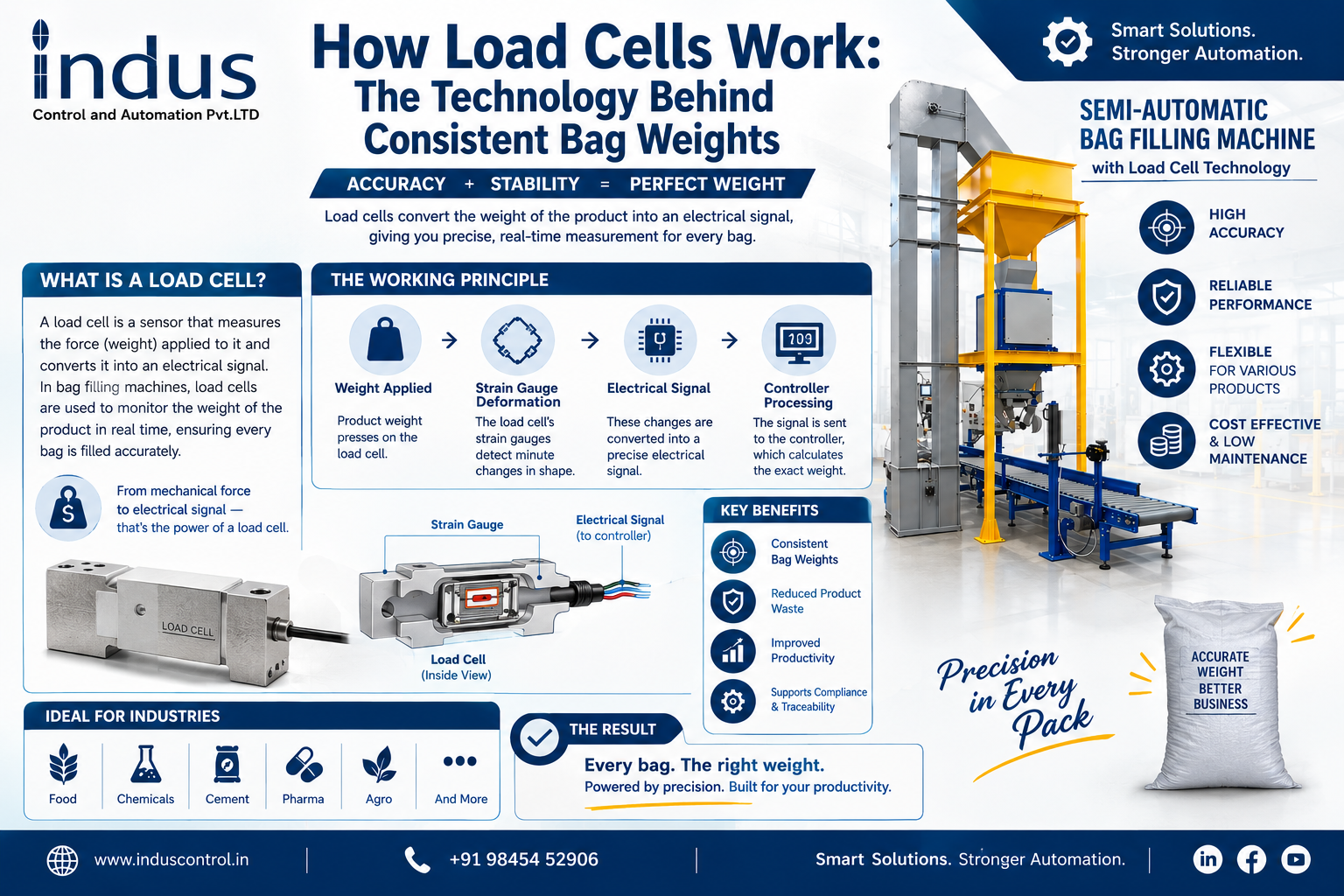
Every accuracy claim on a bag filling machine spec sheet — every ±20g, every ±0.5%, every promise of consistent fill weight — traces back to a single component most buyers never actually think about: the load cell. It’s a small, unglamorous piece of engineering bolted underneath the hopper, and it’s doing more work to determine whether your bags come out right than almost anything else on the machine. Understanding how a load cell actually works isn’t just technical curiosity. It’s the difference between reading a spec sheet and evaluating one — between accepting an accuracy number at face value and knowing what would have to be true for that number to be real. This guide walks through the technology end to end: how a load cell converts weight into a signal, how that signal becomes a reading you can trust, and how the whole system works together inside a bag filling machine to hit a target weight bag after bag after bag. In this guide: What a Load Cell Actually Is A load cell is a transducer — a device that converts one form of energy or signal into another. Specifically, it converts a mechanical force (weight, in this case) into an electrical signal that a controller can read, process, and act on. When a bag filling machine reports that it has dispensed 24.98 kg into a 25 kg bag, that number originated as a physical deformation inside the load cell, converted into an electrical signal, converted again into a digital reading, and displayed on the HMI in the time it takes to glance at the screen. That chain — mechanical force to electrical signal to digital reading — is the entire foundation of weighing accuracy. Every factor discussed elsewhere in accuracy conversations, from calibration to environmental stability, is really a question of how faithfully that chain holds up under real production conditions. It’s worth appreciating what this replaced. Before strain gauge load cells became standard, industrial weighing relied on mechanical systems — springs, levers, and counterweights that translated force into a physical position a person read off a dial. Those systems worked, but they wore down, drifted with mechanical fatigue, and couldn’t easily feed a reading into an automated control system. A load cell does the same fundamental job — converting force into a measurement — but does it electronically, continuously, and in a form a controller can act on dozens of times per second. That shift from a mechanical reading to a live electronic signal is precisely what makes automated, feedback-controlled bag filling possible in the first place. The Core Technology: Strain Gauges Almost every load cell used in industrial weighing — including in bag filling machines — relies on strain gauge technology. The principle is elegant once you see it laid out. Inside the load cell body is a precisely machined metal element, usually an aluminum or alloy steel structure, engineered to flex in a very specific, predictable way when weight is applied to it. Bonded directly onto that metal element is a strain gauge — a thin, folded pattern of conductive foil or wire, arranged so that when the metal beneath it stretches or compresses, the gauge stretches or compresses along with it. Here’s the part that makes the whole system work: stretching a thin conductor makes it very slightly longer and thinner, which increases its electrical resistance. Compressing it does the opposite. The change is genuinely tiny — a fraction of a percent of the gauge’s total resistance, even under a full-capacity load — but it’s real, it’s consistent, and it’s directly proportional to how much the metal element deformed, which is directly proportional to the weight applied. That’s the entire physical principle: weight causes deformation, deformation causes a resistance change, and the resistance change is the raw signal everything else in the system is built to measure. The Wheatstone Bridge: Making an Invisible Change Measurable A resistance change of a fraction of a percent is far too small to read directly and reliably — it would be lost in electrical noise before it told you anything useful. This is where the Wheatstone bridge circuit comes in, and it’s the reason load cells have been built this way for the better part of a century. Rather than using a single strain gauge, a load cell typically arranges four strain gauges into a diamond-shaped circuit called a Wheatstone bridge — two gauges positioned to stretch under load, two positioned to compress. Wired together this way, the circuit becomes exceptionally sensitive to the difference between the gauges rather than their absolute resistance, which cancels out a lot of the electrical noise and temperature drift that would otherwise swamp the signal. Apply a small, stable excitation voltage across the bridge, and the output is a tiny voltage — typically just a few millivolts per volt of excitation — that varies in direct, predictable proportion to the applied weight. That millivolt-level output is what actually leaves the load cell. It’s precise, it’s proportional, and it’s completely unreadable to a human being without the next stage of the system. From Raw Signal to a Calibrated Reading The millivolt signal from the load cell travels to a digital weight indicator or HMI controller, which does three jobs in sequence: amplification, filtering, and calibration. Amplification boosts the tiny millivolt signal to a level the controller’s analog-to-digital converter can work with accurately. Digital filtering smooths out electrical noise and mechanical vibration — without it, a passing forklift or a nearby compressor cycling on could register as a phantom weight change. Calibration is what ties the whole system to a known reference: during setup, the machine is loaded with a certified reference weight, and the controller learns exactly what voltage output corresponds to exactly what real-world weight, building the conversion table every subsequent reading depends on. This is also where the distinction between resolution and accuracy — covered in more depth in why ±20g accuracy beats a ±0.5% spec — actually originates. Resolution
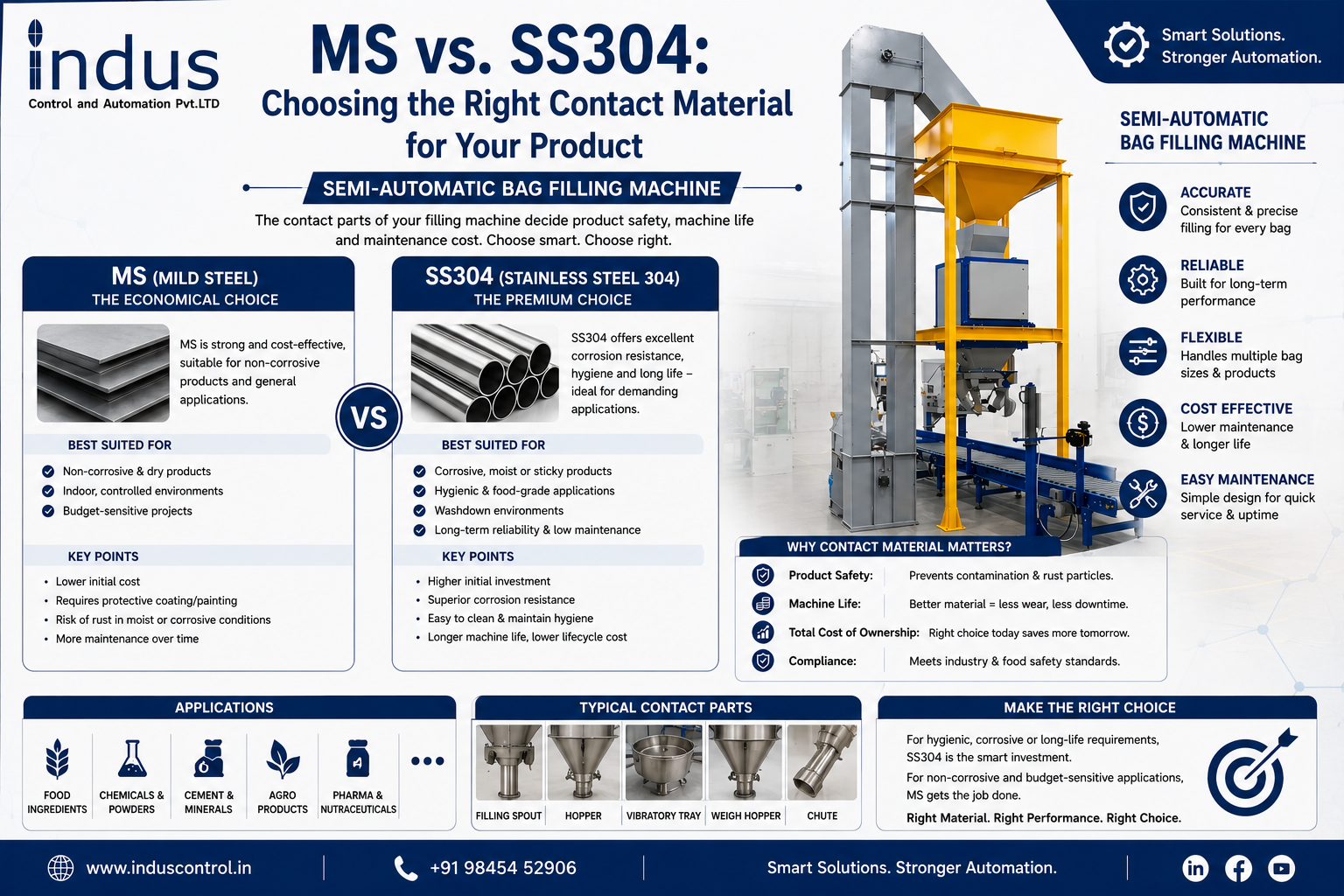
MS vs. SS304 Choosing the Right Contact Material for Your Product
Somewhere on almost every bag filling machine quotation is a single line that quietly moves the price more than nearly any other spec: construction material. MS vs SS304 looks, on paper, like a simple upgrade decision — pay more, get stainless. In practice, it’s a materials-engineering question with a genuinely correct answer for your product, and getting it wrong in either direction costs you: overspend on stainless you didn’t need, or under-spec mild steel into a job that corrodes, contaminates, or fails inspection. This guide breaks the decision down properly — what each material actually is, where each one belongs, and the handful of factors that should drive your choice instead of a default assumption that “stainless is always safer” or “mild steel is always cheaper and fine.” In this guide: What “Contact Parts” Actually Means Before comparing materials, it’s worth clearing up a misconception that inflates a lot of quotations unnecessarily: choosing SS304 doesn’t have to mean the entire machine is stainless. “Contact parts” refers specifically to the surfaces that actually touch the product — the hopper, feed chute, filling spout, and any internal surface the material passes over on its way into the bag. The structural frame, housing, and non-contact components can often remain mild steel even on a machine specified with SS304 contact parts, because hygiene and corrosion resistance only matter where the product itself is present. This distinction matters because it’s rarely offered by default — most quotations either present a fully MS machine or a fully SS304 one, and the hybrid option (SS304 where it matters, MS everywhere else) has to be requested explicitly. If your product genuinely needs stainless contact surfaces but your budget is sensitive to a full-stainless build, this is the question to ask before assuming you have to choose between “cheap and unsuitable” or “correct but expensive.” It’s a five-minute conversation with a manufacturer that can meaningfully change what ends up on your final quotation. What Is Mild Steel (MS)? Properties and Where It Fits Mild steel is a low-carbon steel alloy — strong, weldable, widely available, and significantly less expensive than stainless grades because it contains no chromium or nickel. Its defining weakness is exactly what those elements would otherwise prevent: mild steel corrodes when exposed to moisture, and it offers no meaningful resistance to acidic or reactive materials without an added coating or finish. That weakness is irrelevant for a large share of industrial packaging applications. Dry, non-corrosive, non-food materials — construction inputs, many fertilizers, most industrial minerals, and a wide range of non-reactive powdered chemicals — don’t expose the machine to the conditions mild steel is vulnerable to. In those applications, mild steel isn’t a compromise; it’s the appropriately specified, cost-efficient choice, and paying a premium for stainless contact parts would be solving a corrosion problem that was never going to occur. Mild steel’s practical limits show up fast, though, once moisture, acidity, or food-contact hygiene requirements enter the picture — which is exactly where SS304 takes over. What Is SS304 (Stainless Steel)? Properties and Where It Fits SS304 — sometimes called “18/8” stainless for its approximate 18% chromium and 8% nickel content — forms a thin, self-repairing chromium oxide layer on its surface that gives it genuine corrosion resistance rather than a coating that can wear off. That same property makes it non-reactive with most food products, resistant to a wide range of cleaning agents, and capable of holding a smooth, non-porous finish that doesn’t harbor bacteria the way a rougher or corroded surface would. For food-contact equipment in India, this isn’t just a quality preference — it’s close to a regulatory baseline. FSSAI’s food-contact surface requirements call for non-toxic, non-absorbent, rust-free material, and food-grade stainless steel — SS304 or above — is the standard manufacturers build to for exactly this reason. Requirements at this level extend explicitly to packaging machinery, hoppers, and similar product-contact equipment, not just visible kitchen surfaces. SS304 isn’t the only stainless grade in use — SS316 adds molybdenum for additional corrosion resistance and is more common in pharmaceutical, marine, or highly corrosive chemical environments — but SS304 is the standard, cost-appropriate choice for the large majority of food, feed, and general chemical packaging applications where corrosion resistance and hygiene matter without those more extreme conditions. How to Verify You’re Actually Getting SS304 “SS304” on a quotation is a claim, not a guarantee — and there’s a real financial incentive for it to be misrepresented. SS304’s nickel content makes it genuinely more expensive to produce than SS202, a lower grade that substitutes much of that nickel with manganese and nitrogen. Polished and finished, SS202 can look nearly identical to SS304 to the naked eye, while offering meaningfully worse corrosion and pitting resistance — precisely the properties you’re paying the SS304 premium for in the first place. This isn’t a reason for blanket suspicion of every supplier, but it is a reason to verify rather than simply take a spec sheet’s word for it: Treat the request for documentation as routine, not adversarial — a manufacturer confident in their material sourcing will treat it the same way, and a semi-automatic bag filling machine spec’d in genuine SS304 is worth confirming before it becomes part of a production line you’re relying on for years. MS vs. SS304: Head-to-Head Comparison Factor Mild Steel (MS) SS304 Stainless Steel Corrosion resistance Poor without coating; rusts with moisture exposure Strong — self-repairing oxide layer resists most moisture and mild chemical exposure Hygiene / cleanability Adequate for dry, non-food materials Smooth, non-porous, meets food-contact hygiene expectations Relative cost Lower Higher — real raw material and fabrication premium Durability in the right setting Excellent for dry, non-corrosive use Excellent across a wider range of conditions, including moisture and mild chemical exposure Fabrication and welding Faster, more widely available skill Slower, more specialized finishing needed for food-grade standard Regulatory fit for food contact Not suitable for food-contact surfaces Meets FSSAI food-contact expectations Best suited to Cement, sand, plaster, many fertilizers, dry
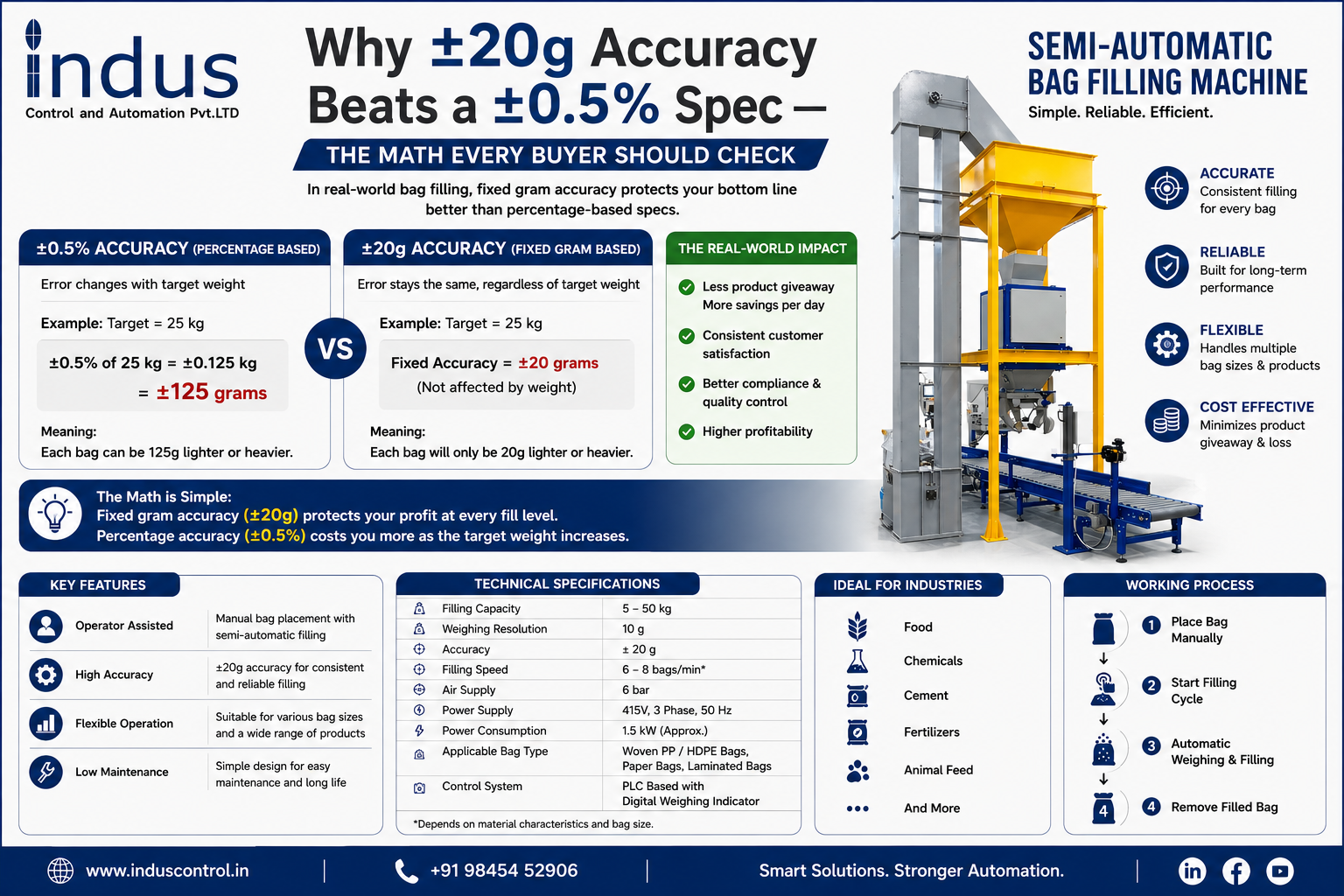
Why ±20g Accuracy Beats a ±0.5% Spec — The Math Every Buyer Should Check
Two bag filling machine spec sheets sit side by side. One says accuracy of ±20 grams. The other says accuracy of ±0.5%. Which one is tighter? Most buyers can’t answer that question on sight — and that’s not a knock on them. Grams and percentages aren’t the same unit, and comparing them without converting one into the other is like comparing a price in rupees to a price in dollars and assuming the smaller number wins. It’s exactly this confusion that lets a wide, unhelpful accuracy spec sound just as good as a tight one, right up until someone does the math. This article does that math, in full, for bag filling machine accuracy claims across the 5 kg to 50 kg range most mid-scale packaging lines actually run. It also covers the one spec-sheet trick that matters more than either number — the difference between accuracy and resolution — and how to ask a manufacturer the right question before you buy, not after. In this guide: Why Accuracy Specs Are Genuinely Confusing Manufacturers express bag filling machine accuracy in one of two ways: as an absolute figure in grams (±20g, ±50g), or as a percentage of the target fill weight (±0.2%, ±0.5%). Both are legitimate ways to describe a weighing system’s performance. The problem is that they behave completely differently depending on bag size, and almost nobody converts one into the other before comparing. An absolute gram spec means the same thing regardless of what you’re filling — ±20g is ±20g whether you’re bagging 5 kg of spice or 50 kg of cement. A percentage spec, by contrast, scales with the bag: ±0.5% is a tiny, tight tolerance on a 5 kg bag and a much looser one on a 50 kg bag. That scaling is exactly why a percentage figure can look impressively consistent across a manufacturer’s whole capacity range while actually representing a very different real-world tolerance at each end of it. Neither format is inherently dishonest. But side by side, without conversion, they’re not telling you what you think they’re telling you — and that gap is where buyers make expensive assumptions. The Math: Converting Between Grams and Percentage The conversion itself is simple, and it’s worth doing every time you compare two quotations: Percentage → grams: multiply the percentage (as a decimal) by the target bag weight. Example: 0.5% accuracy on a 25 kg bag = 0.005 × 25,000g = 125g of tolerance. Grams → percentage: divide the gram tolerance by the target bag weight. Example: ±20g accuracy on a 25 kg bag = 20 ÷ 25,000 = 0.0008 = 0.08%. Run both machines through the same formula at the same bag weight, and you’re finally comparing the same thing. Skip this step, and “±0.5%” simply sounds more precise than “±20g” to anyone scanning a spec sheet quickly — even in cases where it isn’t. The Real Comparison: ±20g vs. ±0.2%–0.5% Across the Capacity Range Indus semi-automatic bag filling machines are rated at ±20 grams absolute accuracy across a 5 kg to 50 kg capacity range. Several competing machines in the cattle feed and general bagging segment advertise accuracy in the ±0.2% to ±0.5% range instead. Converted to the same units across that full capacity range, here’s what that actually means: Bag Weight ±20g as a Percentage ±0.2%–0.5% Converted to Grams 5 kg 0.40% 10g – 25g 10 kg 0.20% 20g – 50g 15 kg 0.13% 30g – 75g 20 kg 0.10% 40g – 100g 25 kg 0.08% 50g – 125g 40 kg 0.05% 80g – 200g 50 kg 0.04% 100g – 250g Read honestly, this table tells a more useful story than a blanket “we’re always more accurate” claim would. At the smallest bag size in the range — 5 kg — a ±20g absolute spec (0.40%) sits inside the competitor’s stated ±0.2%–0.5% window, not clearly ahead of it. The two specs converge around the 10 kg mark, where ±20g and the tightest commonly advertised percentage claim (±0.2%) work out to exactly the same real-world tolerance. Above 10 kg, the gap opens quickly and keeps opening. At 25 kg, a flat ±20g tolerance is roughly 2.5 to 6 times tighter than the ±0.2–0.5% range converted to grams. At 50 kg, it’s 5 to over 12 times tighter. For the bag weights that dominate cattle feed, fertilizer, bulk grain, and cement sample bagging — mostly in the 20–50 kg band — that’s not a marginal difference. It’s a materially different real-world tolerance, and it’s invisible until someone runs the conversion. Resolution Is Not Accuracy — A Distinction Worth Knowing There’s a second confusion that’s arguably more important than the grams-versus-percentage question, and it shows up on spec sheets constantly: resolution is not the same thing as accuracy, even though the two get blurred together often enough that it’s worth checking deliberately. Resolution — sometimes called “least count” — is the smallest increment a weighing system can register or display. Accuracy is how close the actual delivered weight comes to the target, in real-world operating conditions, accounting for everything from product flow variability to mechanical settling time. A system can have fine resolution and still deliver mediocre real-world accuracy, because resolution only describes what the display can show, not what the machine reliably achieves bag after bag. This isn’t a hypothetical concern. Industry analysis of India’s weighing equipment market has noted that Indian Legal Metrology follows OIML guidelines in principle but has not yet formalized specific rules for load cell certification — and as a result, the market includes weighing equipment where a system’s least count gets marketed as though it were its accuracy. In practice, that means a “0.5% accurate” claim on some spec sheets may really be describing what the display can resolve to, not what the machine consistently hits under real production conditions. The way to see past this is to ask for both numbers, separately, and be wary of any manufacturer who only offers one. Indus’s own spec sheet states resolution
Bag Filling Machine Price in India: What Actually Drives the Cost (2026)
“What’s the price of a bag filling machine?” is the single most-searched question in this category — and it’s also the one question no honest manufacturer can answer with a single number. A bag filling machine price in India can vary enormously between two machines that look nearly identical on a spec sheet, because the price isn’t really set by the category of machine. It’s set by a dozen smaller decisions buried inside that spec sheet. This guide isn’t a price list, and you won’t find a number in it. Instead, it’s a breakdown of exactly what pushes a bag filling machine’s cost up or down, so that when you do request a quotation, you know precisely what you’re paying for — and whether the quote in front of you is actually comparable to the one sitting next to it. In this guide: Why There’s No Single “Bag Filling Machine Price” Search for a bag filling machine price in India and you’ll find wildly different figures across supplier listings — sometimes for machines that appear, on the surface, to do the same job. That spread isn’t manufacturers being inconsistent. It’s a reflection of how customized industrial packaging equipment actually is. Two “semi-automatic bag filling machines” can differ in weighing accuracy, construction material, controller sophistication, speed, and half a dozen optional accessories — any one of which can move the price meaningfully. A machine quoted for 5–10 kg cattle feed bags with a basic mild-steel frame and manual weight-setting is a fundamentally different product from a 50 kg-capacity, SS304, dust-controlled unit with a PC data-logging interface — even though both would technically list under the same product category. That’s precisely why a published “price list” for this category is nearly useless on its own. It answers a question (“what’s the cheapest one?”) that isn’t the question that actually matters (“what does my configuration cost?”). The rest of this guide is built to answer the second question — by walking through exactly what you’re paying for. The Core Cost Drivers Every quotation you receive is really a sum of the following decisions. Understanding each one is the fastest way to read a quote intelligently — and to make sure you’re comparing like with like. 1. Capacity Range and Weighing System The weight range a machine is built to handle — say, 5 kg to 50 kg versus a jumbo-bag system built for 500 kg to 1.5 tons — determines the size of the load cell, the structural frame, and the feed mechanism underneath it. A machine engineered for small retail-size bags is a mechanically simpler build than one engineered for bulk industrial bags, and the cost scales accordingly. Buyers sometimes over-specify capacity “just in case,” which quietly inflates cost for headroom they’ll never use — it’s worth sizing this to your actual production range, not your aspirational one. The width of the capacity range matters too, not just its upper limit. A machine built to hold accuracy consistently across a wide span — say, comfortably filling both 5 kg and 50 kg bags on the same unit — needs a more sophisticated load cell and calibration approach than one built for a narrow band around a single target weight. If your product mix genuinely spans a wide range, that flexibility is worth paying for; if you mostly run one or two bag sizes, a narrower, purpose-built range is usually the more cost-efficient choice. 2. Automation Level: Semi-Automatic vs. Fully-Automatic This is usually the single largest lever on price. A semi-automatic bag filling machine automates the weighing and filling while a person places and removes the bag; a fully-automatic system adds automated bag handling, magazine feeding, and often integrated sealing — each of which is its own mechanical and control subsystem layered on top of the same core weighing technology. We’ve broken this comparison down in detail in Semi-Automatic vs. Fully-Automatic Bag Filling Machines: Which Fits a Growing Line? — worth reading before you request quotes on both, since the automation level alone can shift the price far more than any other single factor on this list. 3. Weighing Accuracy and Load Cell Grade Not all load cells are equal, and accuracy isn’t free. A machine rated for tight tolerances — accuracy expressed in single-digit grams rather than a broad percentage of target weight — uses a higher-grade load cell, more sophisticated digital filtering, and more careful calibration during manufacturing. If your product is sold by declared weight under Legal Metrology rules, or your margins are sensitive to “giveaway” (the small overfill manufacturers add to avoid underweight bags), paying for tighter accuracy usually earns back its premium through reduced product giveaway over the life of the machine. 4. Construction Material: Mild Steel vs. SS304 Contact-part material is one of the more visible cost drivers, because it’s a straightforward raw-material difference. Mild steel (MS) construction costs less than SS304 stainless steel, which contains chromium and nickel and commands a real premium as raw material before it’s even fabricated. For non-food, non-corrosive materials — many chemicals, fertilizers, and construction materials — MS is often entirely appropriate and the more cost-effective choice. For food-grade applications, or products where hygiene and corrosion resistance matter, SS304 is usually worth the difference. The right answer depends on what you’re packing, not on defaulting to the more expensive option. It isn’t only the raw material that costs more, either. SS304 is generally slower and more specialized to weld and finish to a food-grade standard than mild steel, which adds fabrication time on top of the material premium. Some buyers split the difference sensibly — SS304 only on the parts that actually contact the product, with MS for the surrounding frame — which is worth asking a manufacturer whether they offer, since it’s rarely presented as an option unless you request it. 5. Speed and Throughput Requirements Bags-per-minute targets affect the feed mechanism, pneumatics, and controller response time. A machine built for a modest, steady output requires less engineering than
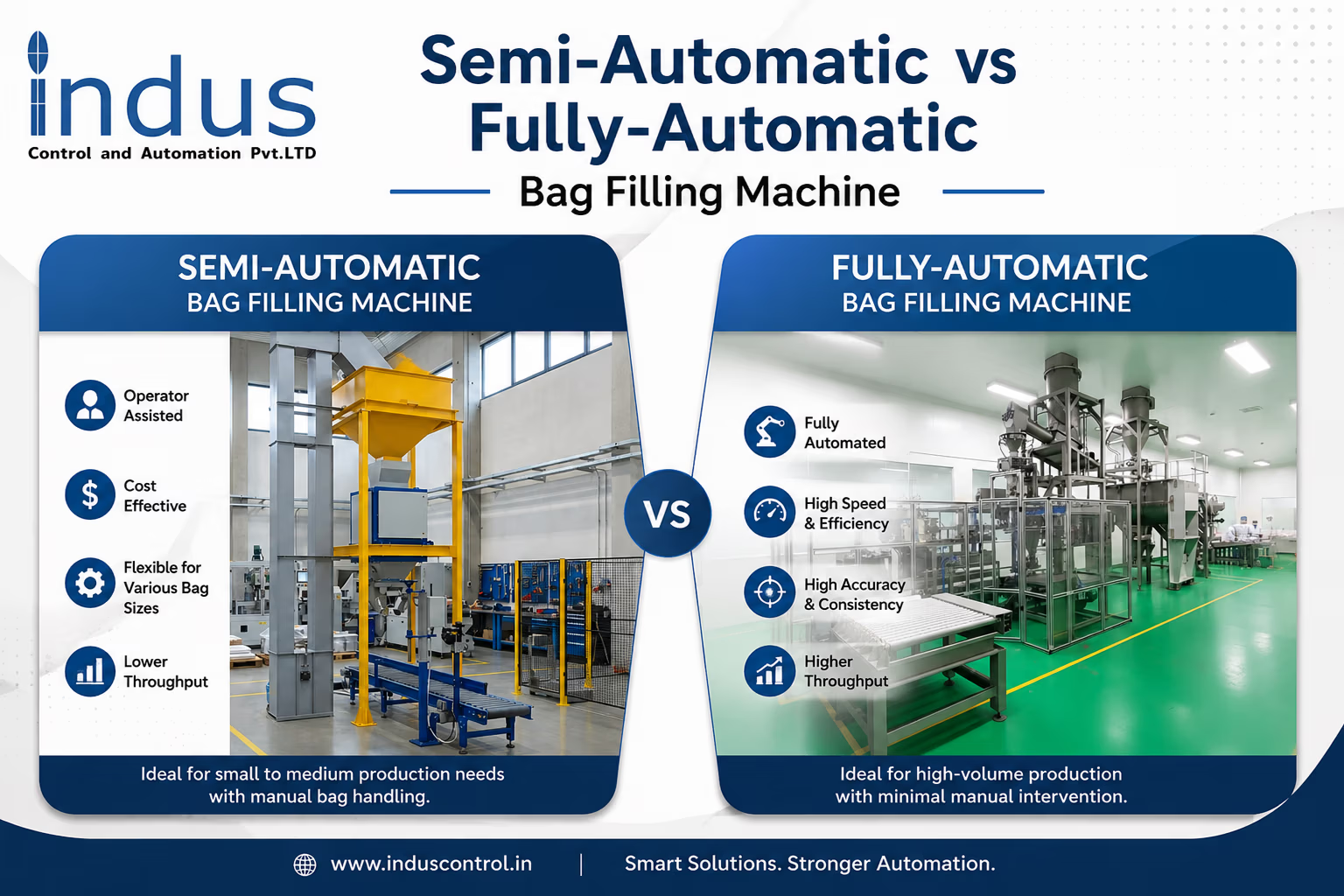
Semi-Automatic vs. Fully-Automatic Bag Filling Machines: Which Fits a Growing Line?
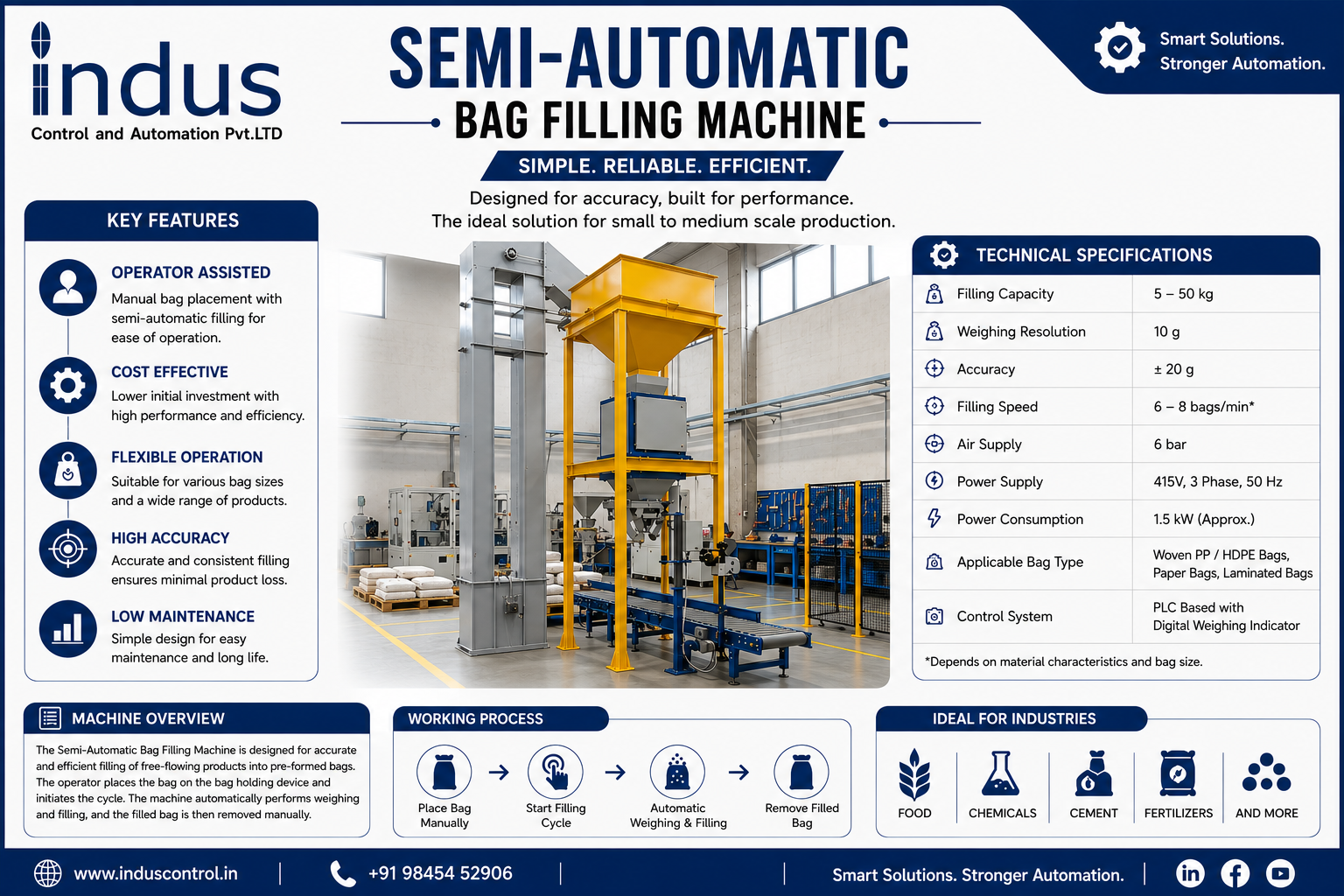
If you’re running a food grain, animal feed, chemical, fertilizer, or construction-material packaging line, you’ll eventually face the same decision: stay with a semi-automatic bag filling machine, or move up to a fully-automatic system. It’s one of the highest-impact equipment calls a growing operation makes, because it shapes your capital spend, your labor plan, and how much headroom you have for the next two to three years of growth. Neither option is universally “better.” A semi-automatic bag filling machine gives you precise, load-cell-based weighing while an operator still places and removes each bag. A fully-automatic system takes the operator almost entirely out of the loop, handling bag placement, filling, and sealing as one continuous sequence. Which one fits depends on your production volume, your budget, how many different products you pack, and how fast your line needs to scale. This guide walks through exactly where the two diverge — cost, speed, accuracy, flexibility, maintenance, and floor space — and which one actually makes sense for a business that’s scaling up rather than standing still. In this guide: What Is a Semi-Automatic Bag Filling Machine? A semi-automatic bag filling machine is a weighing-and-filling system that automates the part that’s hardest to get consistently right — the weighing — while leaving bag placement and removal to a human operator. The operator positions an empty bag on the filling spout, the machine’s load-cell weighing system dispenses a precise, pre-set quantity of material, and the operator removes the filled bag for stitching or heat sealing. That division of labor is the whole point. Weighing accuracy is where automation earns its keep, because a machine with a digital load cell and HMI controller repeats the same fill weight thousands of times without drifting. Bag handling, by contrast, is where flexibility matters most — a person can switch bag sizes, materials, or product types in minutes, something that’s far harder to automate cheaply. Typical semi-automatic machines in this class handle a 5 kg to 50 kg capacity range, with weighing accuracy around ±20 grams and resolution down to 10 grams, running at roughly 6 to 8 bags per minute. Controls are usually a digital weight indicator paired with an HMI touchscreen, and the machine itself is built from mild steel or SS304 for the parts that actually touch the product. That combination — strong accuracy, moderate speed, low operator skill requirement — is exactly why semi-automatic machines dominate the mid-scale packaging segment in India. What Is a Fully-Automatic Bag Filling Machine? A fully-automatic bag filling machine extends that same load-cell weighing system with automated bag handling on both ends. Empty bags are picked from a magazine or stack — sometimes with a robotic or pneumatic gripper — positioned under the filling spout automatically, filled, and then moved into an integrated stitching or sealing station without anyone touching the bag. The operator’s role shifts from doing the physical work to supervising it: loading bulk bag stacks, monitoring the HMI for faults, and handling exceptions. Because the whole cycle is mechanically timed rather than paced by a person, fully-automatic lines typically run faster — often somewhere in the 15 to 25+ bags per minute range depending on configuration, material, and bag size — and can run for longer stretches with fewer people on the floor. That speed and labor reduction comes at a cost: more actuators, more sensors, more integration points, and a bigger footprint. It’s the right investment when volume is high and consistent enough to justify it — which is exactly the trade-off the rest of this guide digs into. Semi-Automatic vs. Fully-Automatic: Quick Comparison Factor Semi-Automatic Bag Filling Machine Fully-Automatic Bag Filling Machine Typical capital investment Lower — a fraction of a fully automated line Higher — bag handling, robotics, and conveyors add significant cost Speed (indicative) ~6–8 bags/minute in the 5–50 kg range Often 15–25+ bags/minute depending on configuration Operators required 1–2 per station, placing and removing bags Minimal — mostly supervision and exception handling Best-fit production volume Low to mid-scale, seasonal, or multi-SKU High-volume, continuous, single or few SKUs Changeover flexibility High — manual adjustment for new bag sizes or products Lower — automated handling is often tuned to specific bag formats Floor space needed Compact Larger — bag magazines, conveyors, and control cabinets add up Maintenance complexity Lower — fewer automated subsystems to service Higher — more sensors, actuators, and integration points Typical buyer Growing SME, multi-product plant, seasonal demand Large-scale plant with steady, high-throughput demand The pattern is consistent across almost every dimension: semi-automatic trades some speed for flexibility and a lower entry cost, while fully-automatic trades capital and complexity for raw throughput and reduced headcount. Neither trade-off is wrong — it depends entirely on where your business sits today. The Real Differences, One at a Time The table above is a fair starting point, but the decision usually comes down to a handful of factors in more depth. Here’s what actually matters once you’re comparing real quotations. 1. Capital Investment and Total Cost of Ownership A semi-automatic bag filling machine is almost always the lower-risk first step. You’re paying for one precision subsystem — the weighing and filling unit — rather than an entire mechanized line. That matters most for businesses where cash flow, not throughput, is the binding constraint. Fully-automatic systems cost more upfront because you’re buying bag-handling automation, often a sealing or stitching integration, and sometimes conveyors or palletizing on top of the weighing core. The total cost of ownership calculation isn’t just the purchase price, either — it includes commissioning, operator training, spare parts inventory for more complex subsystems, and (usually) a service contract. None of that is a reason to avoid automation; it’s a reason to make sure the volume is actually there to justify it before signing. 2. Production Speed and Throughput Speed is the most obvious differentiator, but it’s worth being precise about what it actually buys you. At 6–8 bags per minute, a semi-automatic machine comfortably supports several hundred to a few
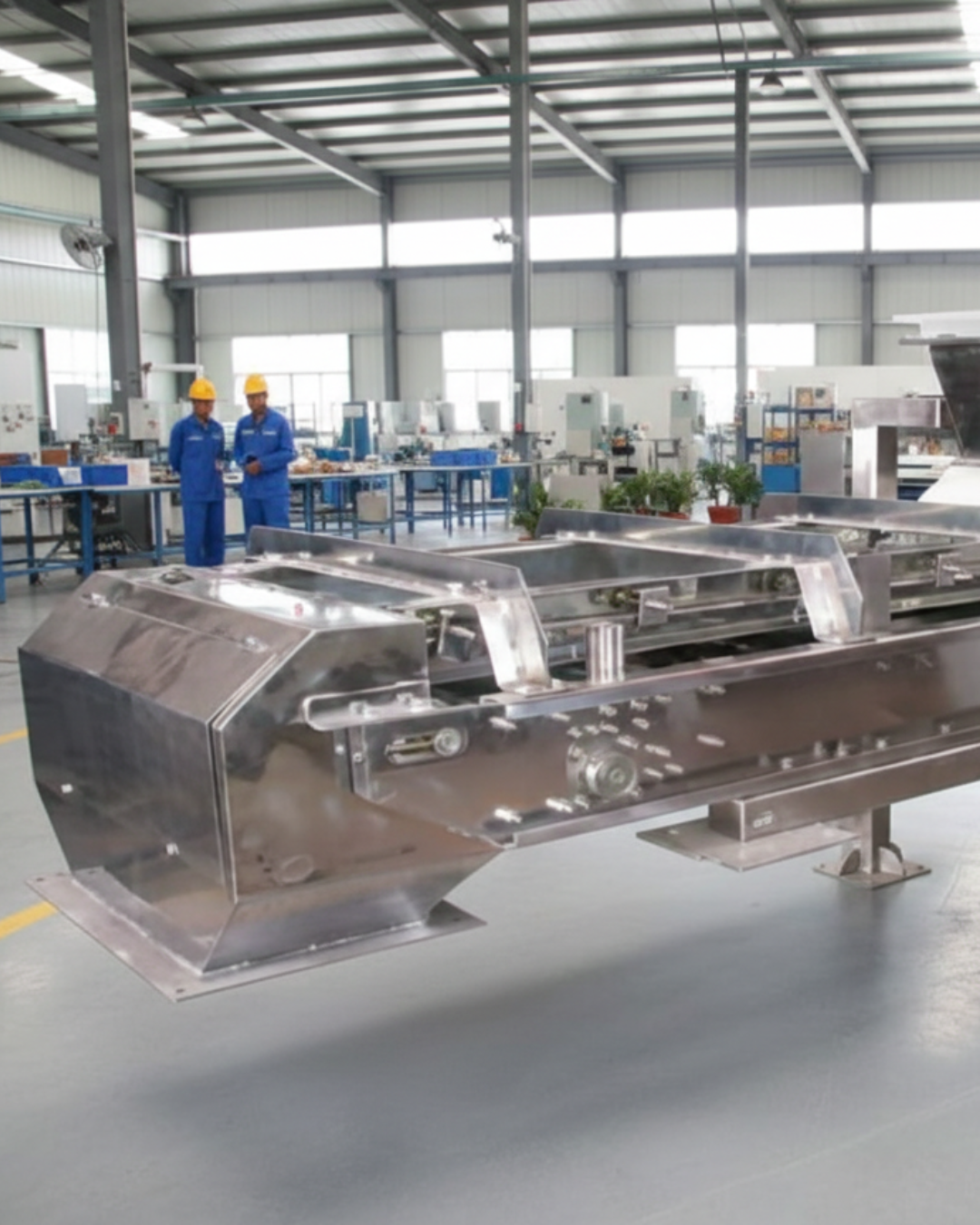
Electronic Gravimetric Weigh Feeder
Electronic Gravimetric Weigh Feeder Precision Continuous Weighing & Feeding for Bulk Solids Indus Electronic Gravimetric Weigh Feeders represent the pinnacle of continuous feeding technology for bulk solids. As a leading manufacturer in Bangalore, we incorporate state-of-the-art engineering to deliver precise, reliable proportioning of materials in high-volume industrial processes. Operating on a closed-loop control system, these feeders continuously measure belt load and speed, compare actual flow to setpoints, and automatically adjust conveyor speed to maintain exact feed rates—ensuring consistent quality and optimal process control. How It Works – Closed-Loop Control System Technical Specifications Feature Specification Capacity Range 0.5 – 2000 TPH (tons per hour) Accuracy ±0.5% FSR (Full Scale Range) Belt Width 300 mm – 2000 mm (as per capacity) Load Cells High-precision, hermetically sealed, stainless steel Speed Sensor Rotary encoder, non-contact type Control System PLC with PID controller & Touchscreen HMI Drive System Variable Frequency Drive (VFD) – closed-loop Communication 4-20mA, RS-485, Ethernet/IP, Profibus, Modbus Power Supply 415V, 3 Phase, 50 Hz Salient Features Optional Features Applications Industry Typical Materials Cement Raw meal, clinker, gypsum, coal, fly ash, additives Sponge Iron Iron ore, coal, dolomite, fluxes Steel Sinter, pellets, coke, limestone, slag Fertilizer Urea, DAP, MOP, rock phosphate, additives Chemical Soda ash, pigments, polymers, catalysts Tobacco Cut tobacco, flavoring additives Petrochemical Coke, catalysts, additives Power Plants Coal, limestone for FGD Mining & Minerals Bauxite, copper concentrate, phosphate rock Control & Connectivity Why Choose Indus Weigh Feeder? ✅ High Accuracy – ±0.5% FSR ensures precise control of material flow✅ Robust Construction – Built for 24/7 heavy-duty industrial operation✅ Low Maintenance – Easy belt replacement and sealed components reduce downtime✅ Process Optimization – Consistent feed rate improves product quality and reduces waste✅ Flexible Configuration – Custom lengths, widths, and capacities to match your layout✅ SQC Ready – Optional RS-485 interface for statistical quality control✅ Proven Reliability – Installed in critical processes across cement, steel, and fertilizer industries Integration Capabilities Industries Served Industry Application Cement Raw mill feeding, kiln feeding, coal firing Sponge Iron Rotary kiln feeding Steel Sinter plant, blast furnace charging Fertilizer Granulation plant dosing Chemical Continuous reactor feeding Tobacco Flavor dosing, blending Petrochemical Catalyst addition Request a Weigh Feeder Proposal ✅ Material Analysis – We evaluate your material characteristics for optimal design✅ Process Review – Assess your current feeding setup and recommend improvements✅ Capacity Calculation – Determine correct size and speed for your throughput✅ Layout Planning – Provide CAD drawings for seamless plant integration✅ Performance Guarantee – Committed to specified accuracy and reliability✅ After-Sales Support – Installation, commissioning, training, AMC, spare parts 📞 Call/WhatsApp: +91 98454 52906📧 Email: indusdigitalmarketing01@gmail.com🌐 Website: www.induscontrol.in Precision in motion. Control in flow.
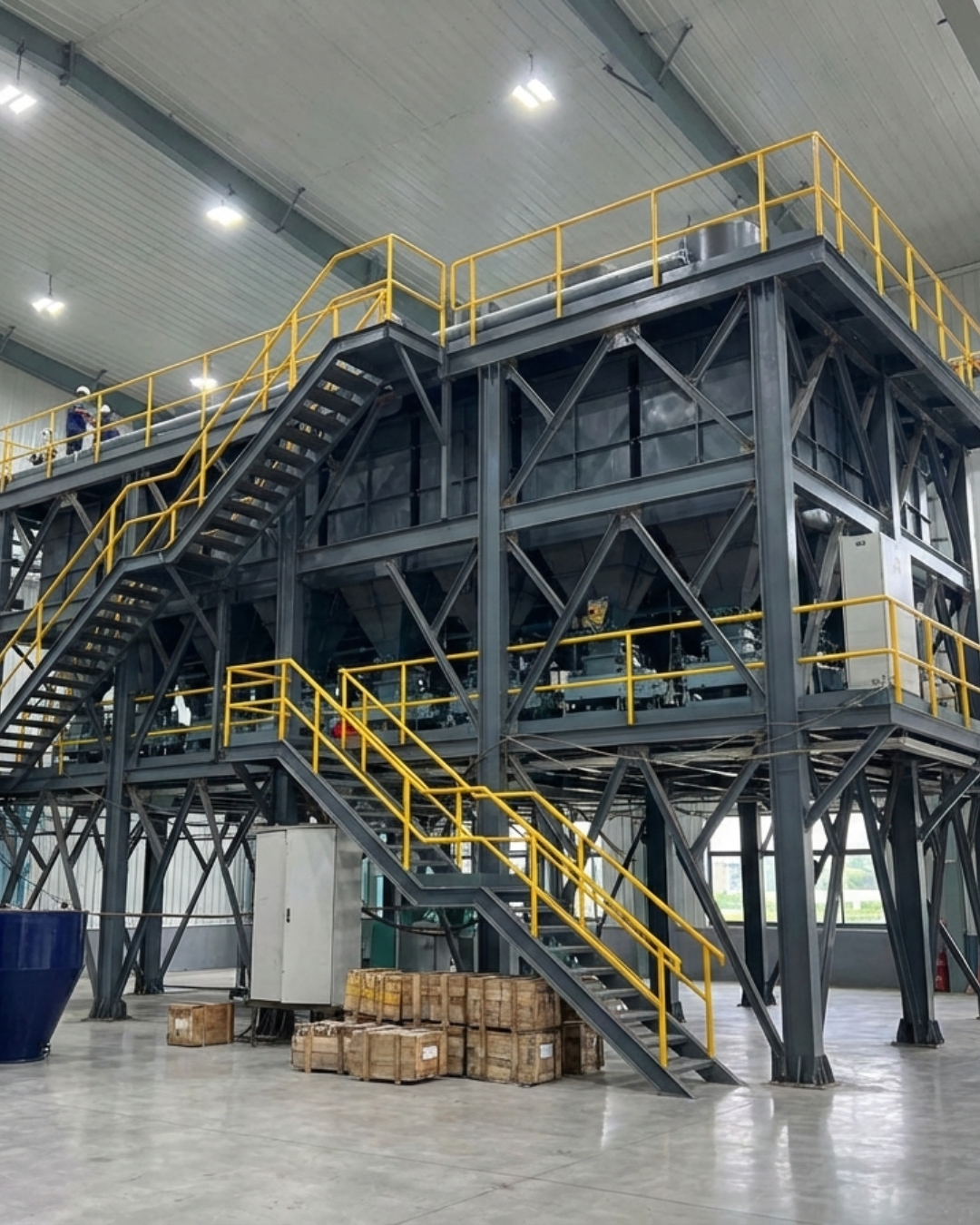
Weigh Batching System
Weigh Batching System Precision Proportioning for Multi-Ingredient Formulations The Indus Weigh Batching System is a fully automated, PLC-controlled solution designed for accurate proportional mixing of two or more ingredients by weight. Whether handling grams or tons, this system ensures consistent formulation quality across batches. Ideal for industries requiring precise recipe adherence—such as ready mix concrete, ferro alloys, chemicals, animal feeds, and food products—our batching systems integrate high-precision load cells with material-specific feeding devices for reliable, repeatable performance. How It Works Technical Specifications Feature Specification Batch Capacity Few grams to several tons (customizable) Weighing Accuracy ±0.1% to ±0.5% FSR (application-dependent) Number of Ingredients 2 to 20+ (scalable) Control System PLC with Touchscreen HMI Weighing Sensors High-precision compression/tension load cells Weigh Vessel Mild Steel / SS 304 / SS 316 (as required) Power Supply 415V, 3 Phase, 50 Hz Air Supply 6 bar (for pneumatic devices) Feeding Devices – Material-Specific Selection For Solid Materials (Powders & Granules) Feeding Device Best For Description Sector Gate Free-flowing granules, pellets Rotary action for controlled flow Slide Gate Coarse materials, high-capacity Linear motion, simple & robust Rotary Vane Feeder Fine powders, metered feeding Precision airlock & dosing Screw Feeder Cohesive powders, floodable materials Enclosed, variable speed control For Liquid Materials Feeding Device Best For Description Butterfly Valve Low-viscosity liquids, large flows Quarter-turn, minimal pressure drop Ball Valve with Actuator Most liquids, including viscous Precise on/off control, durable Key Features Complete System Integration Indus supplies complete turnkey batching systems including: Applications Industry Typical Materials Ready Mix Concrete Cement, aggregates, sand, fly ash, admixtures Ferro Alloys Ore, coke, fluxes, additives Chemicals Powders, granules, liquids, catalysts Animal Feeds Grains, protein meals, vitamins, minerals, oils Food Products Flour, sugar, spices, additives, liquids Fertilizers Urea, DAP, MOP, micronutrients Tea Processing Tea leaf, flavor granules, additives Cement Industry Raw meal, gypsum, slag, fly ash Pharmaceuticals APIs, excipients, binders Plastics Resins, masterbatch, additives Control & Automation Features Optional Features Why Choose Indus Weigh Batching System? ✅ Exceptional Accuracy – ±0.1% ensures precise formulations & reduced waste✅ Flexible Configuration – Adapts to solids, liquids, or combination✅ Material-Specific Feeding – Optimized for each ingredient type✅ Scalable Design – Grow from simple to complex systems✅ User-Friendly – Intuitive HMI with recipe management✅ Turnkey Solutions – Complete system design & supply✅ Proven Reliability – Installed in concrete, chemical, and food plants worldwide Industries Served Industry Typical Applications Concrete RMC plants, precast products Ferro Alloys Furnace charge preparation Chemicals Batch reactors, blending Animal Feed Feed mills, premix plants Food Bakery, snack, beverage production Fertilizers Granulation, blending plants Tea Flavoring, blending lines Cement Grinding aids, additive dosing Request a Custom Batching Solution ✅ Process Analysis – Understand your formulation requirements✅ Feeder Selection – Optimal choice for each material✅ Tank/Vessel Design – Sized for your batch capacity✅ Layout Engineering – CAD drawings for seamless installation✅ Factory Acceptance Test – Witness performance before dispatch✅ Turnkey Installation – Commissioning & operator training✅ After-Sales Support – AMC, spare parts, remote troubleshooting 📞 Call/WhatsApp: +91 98454 52906📧 Email: indusdigitalmarketing01@gmail.com🌐 Website: www.induscontrol.in Batch with precision. Formulate with confidence.
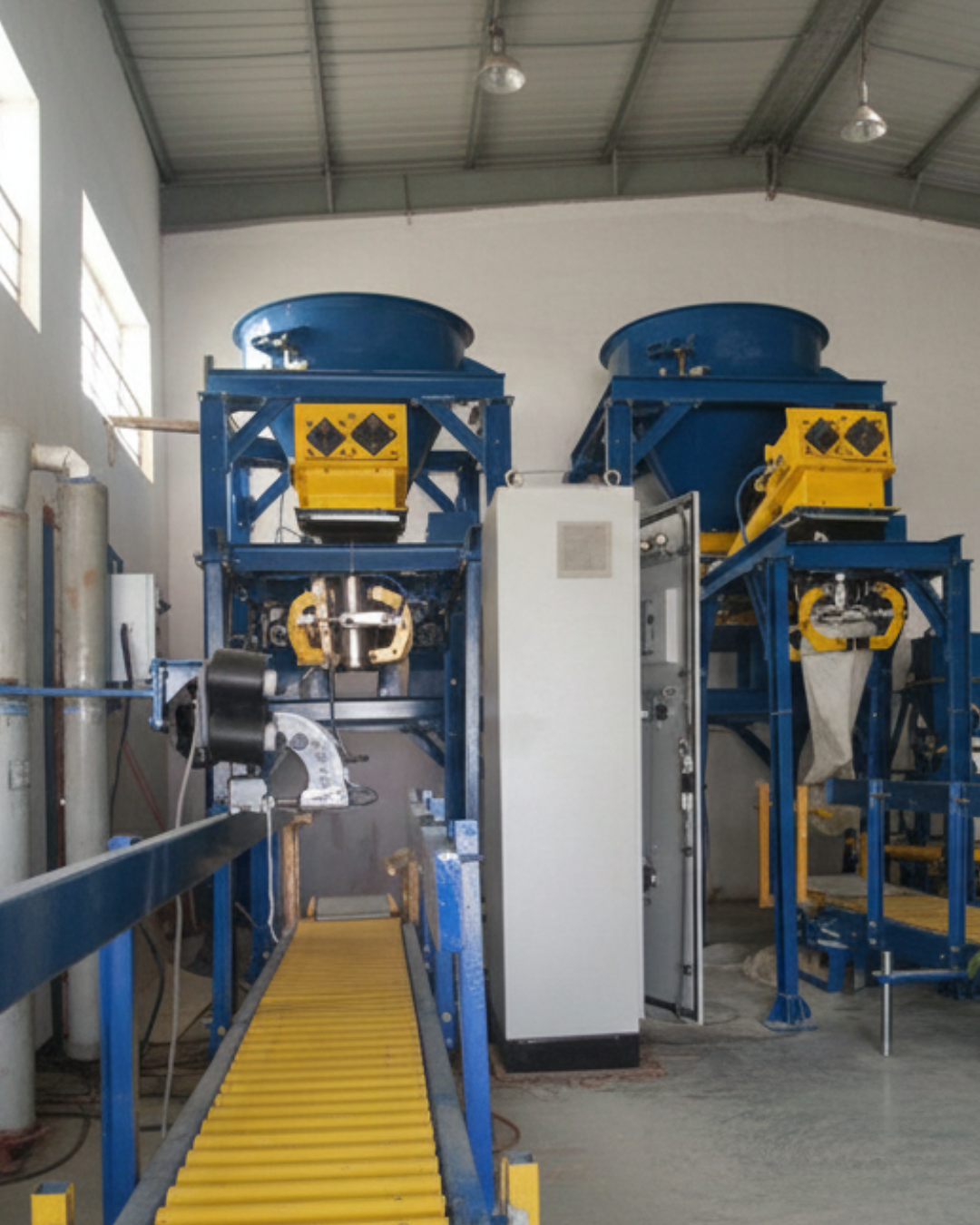
Powder Bagging Machine
Powder Bagging Machine Model: IA-BFM-004High-Accuracy, Dust-Free Powder Filling Solutions Indus Powder Bagging Machines are engineered for precision weighing and dust-free packing of powder materials into various bag types. Available in Net Weigher and Gross Weigher configurations, these systems ensure minimum product loss, zero spillage, and consistent performance for industries handling fine powders, granules, and cohesive materials. With speeds up to 700 bags per hour and advanced features like vacuum de-aeration and nitrogen flushing, the IA-BFM-004 delivers unmatched efficiency and accuracy. Weighing Technology Options 1. Net Weigher System 2. Gross Weigher System Technical Specifications Feature Specification Model IA-BFM-004 Capacity Range 10 – 50 kg (customizable) Weighing Resolution 10 grams Accuracy ±0.5% FSR (product-dependent) Speed Up to 700 bags/hour (product-dependent) Control System PLC with Touchscreen HMI Power Supply 415V, 3 Phase, 50 Hz Air Supply 6–7 bar, clean & dry Key Features Special Features How It Works Net Weigher Process: Gross Weigher Process: Applications Optional Accessories Accessory Function Bag Flattener Ensures uniform bag shape before palletizing Checkweigher Post-fill weight verification and rejection Metal Detector Contaminant detection for food/pharma safety Print & Apply Labeler Automatic barcode/date labeling Auto Pallet Dispenser For fully automated bag handling Stretch Wrapper End-of-line pallet wrapping SCADA Connectivity Production monitoring and data logging Why Choose IA-BFM-004? ✅ Zero Spillage – Enclosed system with dust extraction prevents product loss✅ High Accuracy – ±0.5% FSR ensures minimal giveaway✅ High Speed – Up to 700 bags/hour maximizes production✅ Material Versatility – Handles fine powders to coarse granules✅ Bag Flexibility – Multiple bag types and sealing options✅ Customizable – Tailored to your specific requirements✅ Proven Reliability – Installed in leading chemical, food, and cement plants Integration Capabilities Request a Powder Bagging Assessment ✅ Material Testing – We test your powder to determine optimal feeding system✅ Bag Compatibility – Verify performance with your bag type✅ Line Layout Design – Optimize floor plan for efficiency✅ Performance Guarantee – Guaranteed accuracy based on your material✅ After-Sales Support – Installation, training, AMC, spare parts 📞 Call/WhatsApp: +91 98454 52906📧 Email: indusdigitalmarketing01@gmail.com🌐 Website: www.induscontrol.in Precision in every particle. Efficiency in every bag.
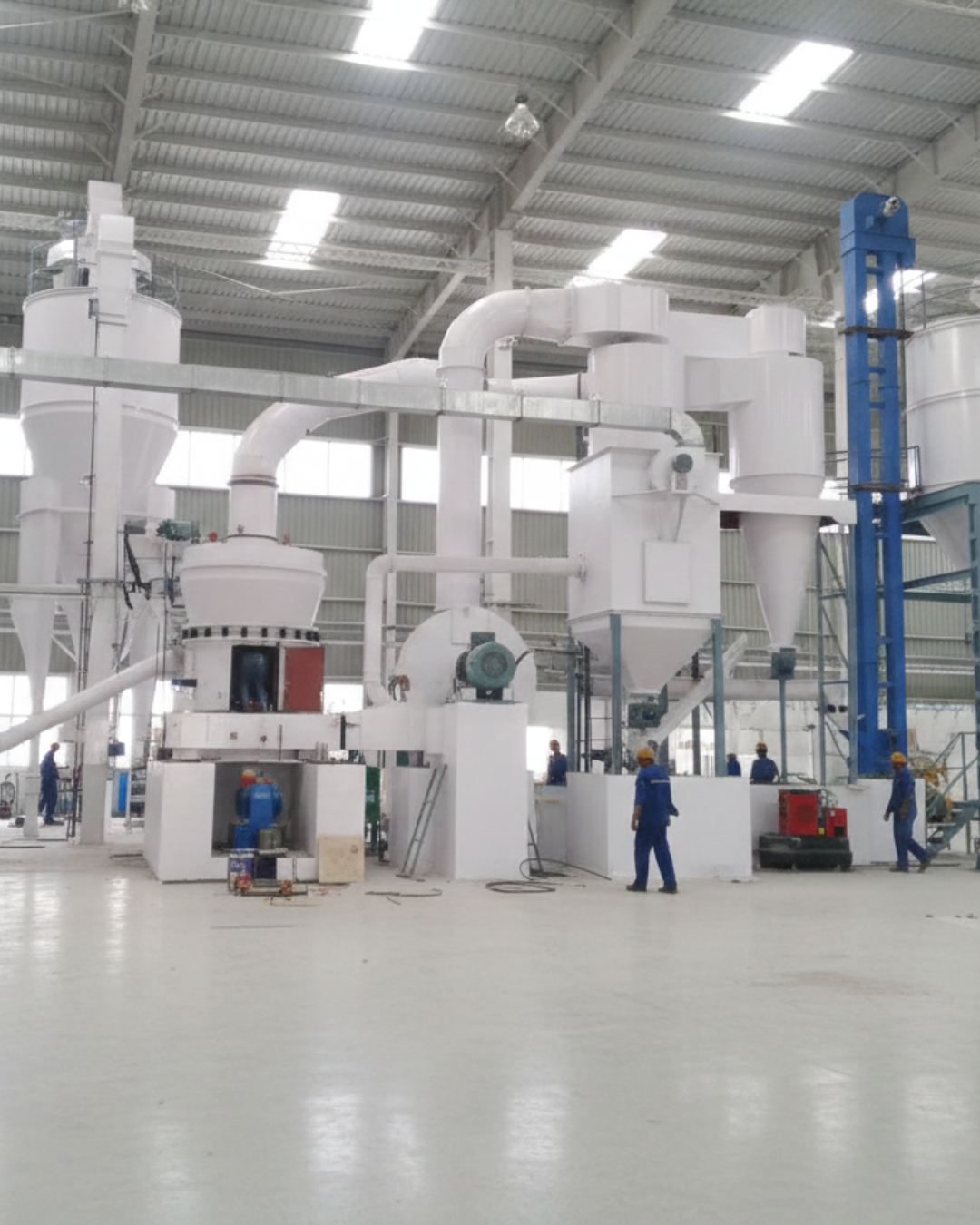
Pneumatic Conveying
Pneumatic Conveying & Material Handling Systems Efficient, Dust-Free Transfer of Bulk Materials Overview Indus Pneumatic Conveying Systems provide efficient, closed-loop transfer of powders, granules, and bulk materials over short or long distances. Designed for industries requiring hygienic, dust-free, and automated material handling, these systems integrate seamlessly with upstream and downstream equipment. We also offer a comprehensive range of mechanical conveying accessories—including screw feeders, belt conveyors, roller conveyors, dust collection systems, and blowout elevators—customized to your specific plant layout and material characteristics. Pneumatic Conveying Systems How It Works Types of Pneumatic Conveying Type Mode Best For Dilute Phase High velocity, low pressure Free-flowing powders, granules over long distances Dense Phase Low velocity, high pressure Fragile, abrasive, or cohesive materials Vacuum Conveying Suction-based Multiple pick-up points, dust-free transfer Positive Pressure Push system Single source to multiple destinations Material Handling Accessories 1. Screw Feeders & Conveyors 2. Belt Conveyors 3. Roller Conveyors 4. Blowout Elevators 5. Dust Collection Systems Integrated System Capabilities We design complete material handling solutions combining multiple technologies: System Component Function Screw Feeder Metered feed from hopper to pneumatic line Pneumatic Conveying Line Transfer to destination Cyclone / Filter Receiver Product-air separation Rotary Valve Airlock at entry/exit points Dust Collector Clean air discharge Mechanical Conveyor Distribution to multiple points Control Panel PLC-based automation with HMI Applications Key Features ✅ Dust-Free Operation – Enclosed system prevents contamination and product loss✅ Flexible Layout – Pipe routing adapts to existing plant infrastructure✅ Gentle Handling – Dense phase options for fragile materials✅ Long-Distance Transfer – Convey up to several hundred meters✅ Multi-Point Distribution – One source to multiple destinations✅ Low Maintenance – Few moving parts, robust construction✅ Automated Control – PLC integration for precise material management✅ Hygienic Options – Sanitary designs for food/pharma Industries Served Industry Typical Materials Cement Fly ash, cement, raw meal Food Flour, sugar, starch, grains Plastics Pellets, regrind, powders Chemicals Powders, granules, additives Pharmaceuticals APIs, excipients Minerals Talc, calcium carbonate Fertilizers Granules, powders Why Choose Indus? ✅ End-to-End Solutions – From design to installation and commissioning✅ Custom Engineering – Tailored to your material and layout✅ Integrated Approach – Combine pneumatic and mechanical conveying seamlessly✅ Proven Reliability – Installed in leading cement, food, and chemical plants✅ After-Sales Support – AMC, spare parts, and remote troubleshooting Request a Material Handling Assessment ✅ Material Testing – Determine conveying characteristics in our lab✅ System Design – Optimal pipe sizing, air requirements, and component selection✅ Layout Integration – CAD drawings for seamless installation✅ Turnkey Execution – Complete installation, commissioning, and training✅ After-Sales Support – Ongoing maintenance and service 📞 Call/WhatsApp: +91 98454 52906📧 Email: indusdigitalmarketing01@gmail.com🌐 Website: www.induscontrol.in Move material efficiently. Handle with care. Automate with Indus.
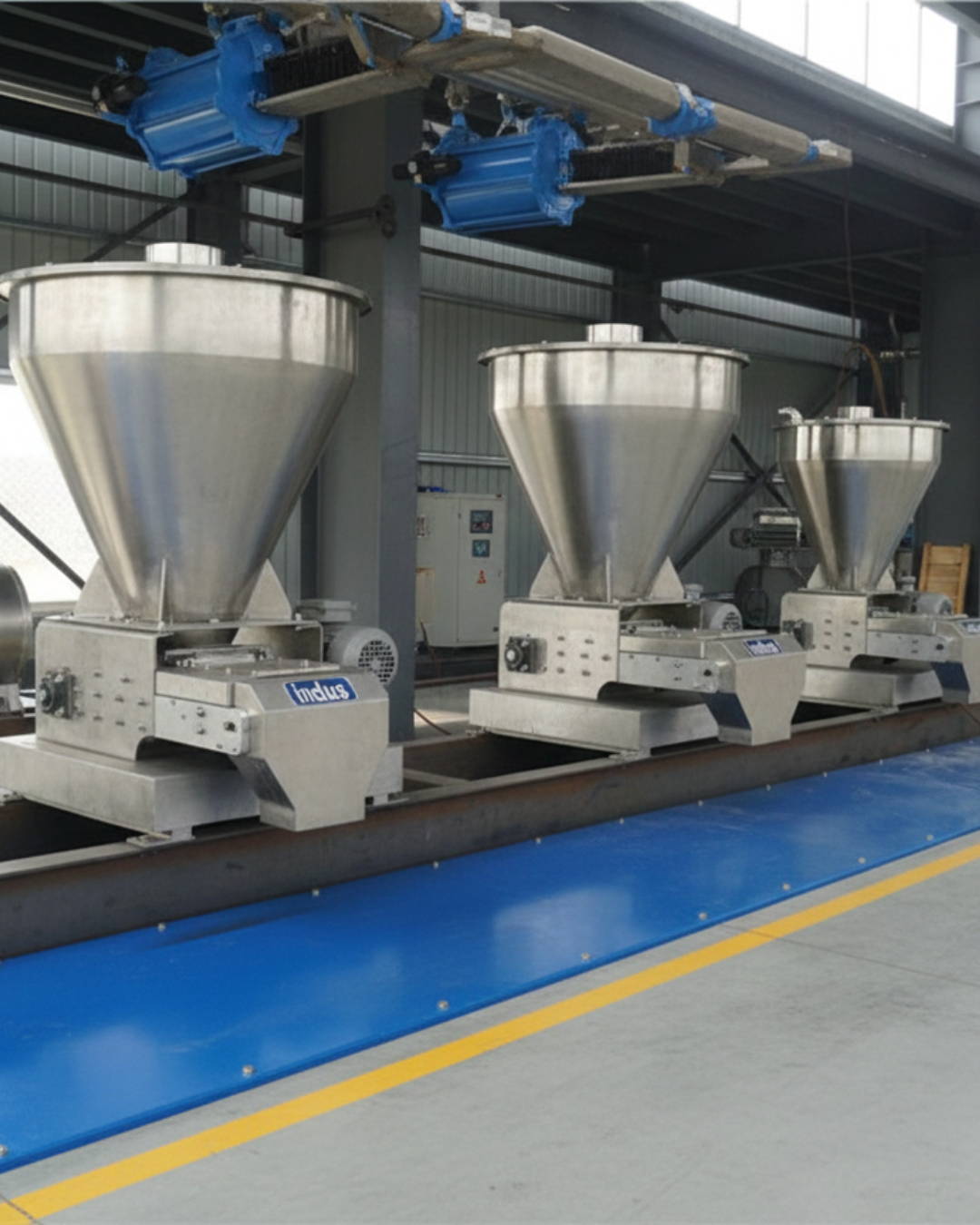
Loss in Weight Feeder
Loss in Weight Feeder Precision Continuous Feeding for Powders, Granules & Bulk Materials Overview Indus Loss in Weight Feeders deliver unparalleled versatility and accuracy for continuous feeding applications across diverse industries. Utilizing advanced PLC-based control with vibration/noise elimination technology and high-sensitivity load cells, these systems maintain precise feed rates from grams to tons per hour. Available in multiple configurations to match material characteristics, they ensure consistent quality in blending, batching, and continuous processes. Technical Specifications Feature Specification Feed Rate Range 10 kg/hr – 1000 tph Machine Capacity 250 gms – 10 tph Weighing Resolution 1/10,000 Accuracy ±0.25% (material dependent) Control System PLC with advanced PID & noise elimination Load Cells High-sensitivity, hermetically sealed Material Contact MS / SS 304 / SS 316 (as required) Communication 4-20mA, RS485, Ethernet/IP, Profibus, Modbus Power Supply 415V, 3 Phase, 50 Hz Available Models Model Best For Description Twin Screw Loss in Weight Low-density, fluffy, aerated powders Dual intermeshing screws for positive displacement & de-aeration Single Screw Loss in Weight Free-flowing granules, pellets, standard powders Cost-effective, reliable, easy maintenance Vibration Type Loss in Weight Fragile materials, flakes, shear-sensitive products Gentle vibration conveying with precise amplitude control Belt Type Loss in Weight High-capacity, abrasive materials Heavy-duty construction for mining, cement, bulk handling How It Works Key Features Applications Industry Typical Materials Detergent Base powder, enzymes, perfumes, bleaches, additives Tea Cut tea, dust, flavor granules, herbal blends Plastics Masterbatch, pigments, additives, regrind, pellets Cement & Steel Raw meal, clinker, gypsum, coal, slag, additives Fertilizer NPK components, micronutrients, coating agents Chemical Catalysts, polymers, pigments, fine powders Food Flour, sugar, starch, spices, protein powders Pharmaceuticals APIs, excipients, binders, lubricants Control & Connectivity Optional Features Why Choose Our Loss in Weight Feeders? ✅ High Accuracy – ±0.25% reduces material waste and ensures quality✅ Versatile Configurations – Model for every material type✅ Stable Operation – Vibration elimination technology ensures reliability✅ Wide Rangeability – One feeder handles multiple feed rates✅ Process Continuity – Auto-refill maintains uninterrupted operation✅ Easy Integration – Compatible with plant control systems✅ Low Maintenance – Robust design with accessible components Industries Served Integration Capabilities Request a Feeding Solution Analysis ✅ Material Testing – Free flowability analysis in our lab✅ Feeder Selection – Recommended model based on material✅ Process Simulation – Verify performance before purchase✅ Factory Acceptance Test – Witness testing with your material✅ Turnkey Installation – Complete commissioning & training✅ After-Sales Support – AMC, spare parts, remote diagnostics 📞 Call/WhatsApp: +91 98454 52906📧 Email: indusdigitalmarketing01@gmail.com🌐 Website: www.induscontrol.in Precision in every gram. Continuity in every process.